Large-Aperture Interferometric Optical Profiler
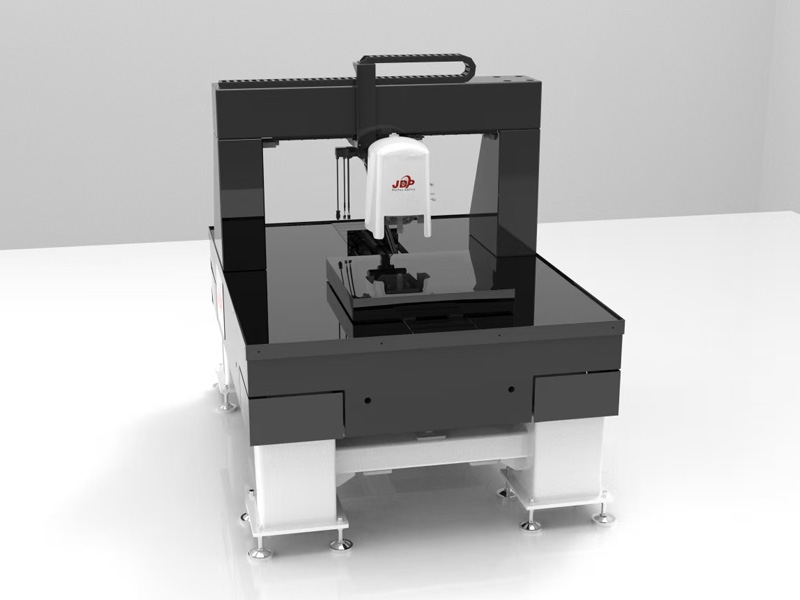
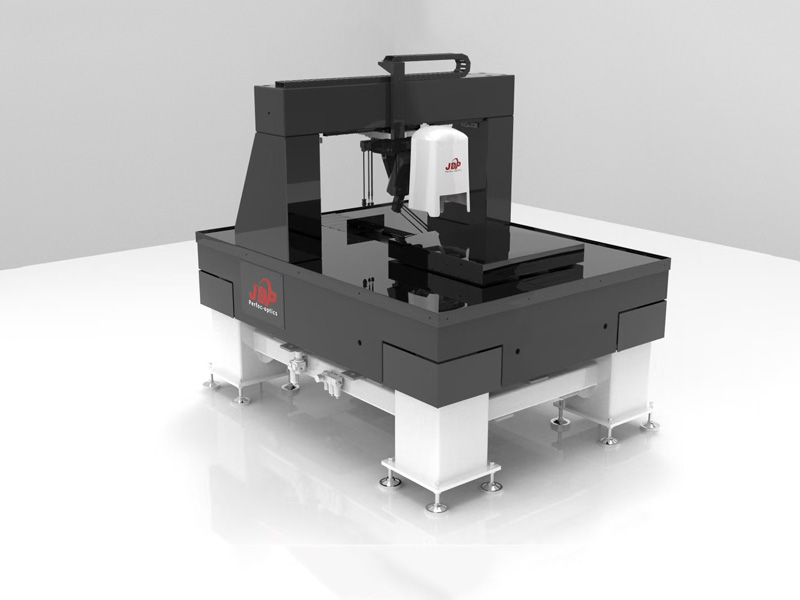
The LS1000 Pro large-stage white light interferometer features a sample stage with a maximum designed dimension of 1.2 m × 1.2 m and a load capacity exceeding 800 kg, enabling full-area measurement of large-size samples. The probe supports a maximum tilting angle of ±45°, and is equipped with an angular displacement stage of ±6° for concentric, coaxial tilt and pitch adjustment, accommodating measurement requirements for various samples including planes, spherical surfaces and freeform surfaces. With fully automated programmable measurement, it can efficiently complete batch inspection tasks. In terms of measurement precision, the surface repeatability achieves better than 0.05 nm, RMS repeatability is superior to 0.005 nm, step height measurement accuracy is better than 0.3% and step height repeatability exceeds 0.1%. Paired with an ultra-wide scanning range from 0.1 nm to 20 mm and a 150 μm piezoelectric ceramic closed-loop scanner, it delivers full-coverage high-precision measurement spanning from nanometer to millimeter scales.
- CrysNova
- LS1000 Pro
- 0.008 nm
- Better than 0.1%
- 0.08 nm
- Better than 0.3%
- ±45°
- 1 m × 1 m
- Planes, spherical surfaces, freeform surfaces, etc.
- Information
Product Overview
The LS1000 Pro large-stage white light interferometer features ultra-precise measurement, wide compatibility and strong environmental immunity, with multiple key specifications reaching internationally advanced levels.
It delivers surface repeatability better than 0.05 nm and RMS repeatability superior to 0.005 nm. Step height measurement accuracy is better than 0.3% with step height repeatability exceeding 0.1%. Equipped with an ultra-wide scanning range of 0.1 nm–20 mm and a 150 μm piezoelectric ceramic closed-loop scanner, it enables full-range high-precision measurement from nanometer to millimeter scale.
The sample stage has a maximum dimension of 1.2 m × 1.2 m and a load capacity over 800 kg, supporting full-area inspection of large-format samples. The probe can tilt up to ±45°, paired with a ±6° angular displacement stage for concentric and coaxial pitch adjustment, suitable for various workpieces including planar, spherical and freeform surfaces. Fully automated programmable batch measurement is available.
The system noise is better than 30 pm. Integrated with real-time temperature and vibration monitoring, it maintains stable measurement under complex working conditions. It has been deployed in high-energy laser fusion, lithography objectives, glass substrates, glass-based circuit boards, chips and other fields, providing precision metrology solutions for advanced manufacturing and facilitating industrial upgrading.
Surface Roughness Measurement
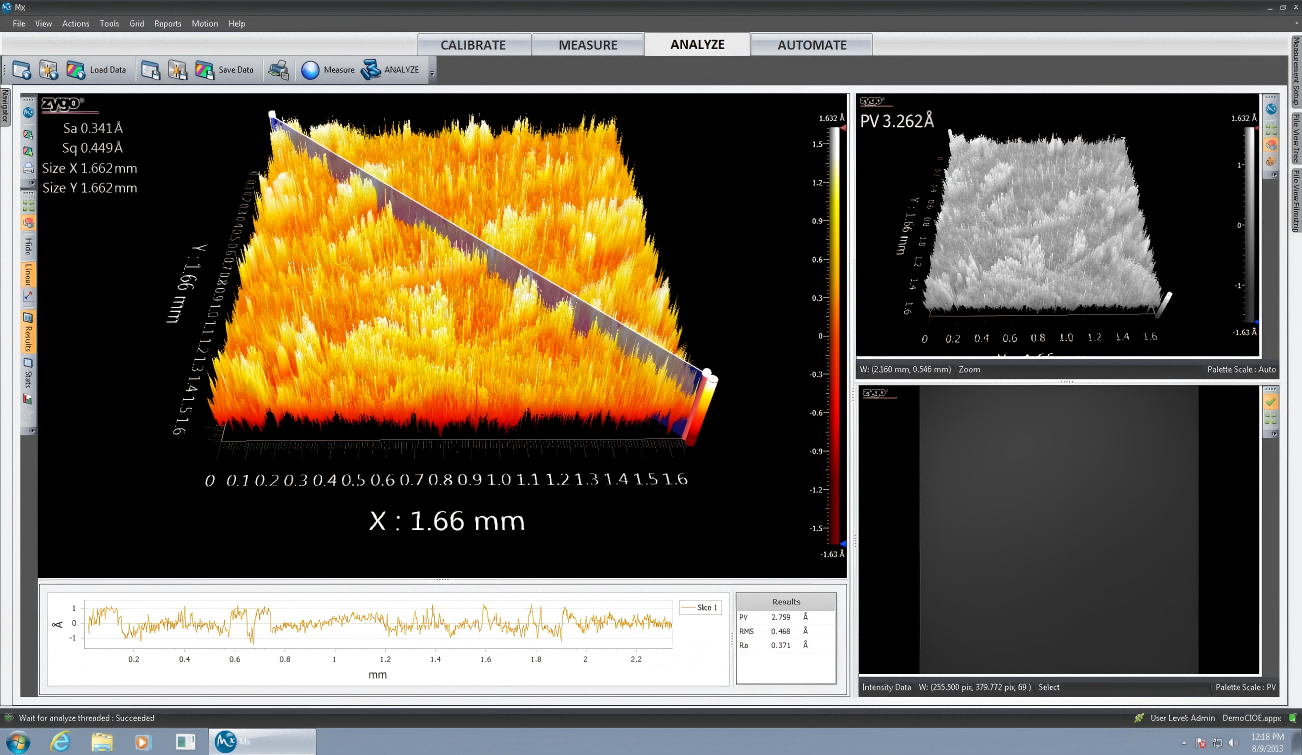
The smallest measurable roughness result directly characterizes the system's noise floor. This noise may originate from optical noise, electronic noise, vibrational environmental influences, and so forth. It signifies that any sample smoother than this, or any signal smaller than this, will be submerged within the system's noise floor. Consequently, this result directly reflects the system's resolution for roughness testing, or in other words, its ultimate capability limit in roughness measurement.
Faster Stitching for Large-Sample Flatness Measurement

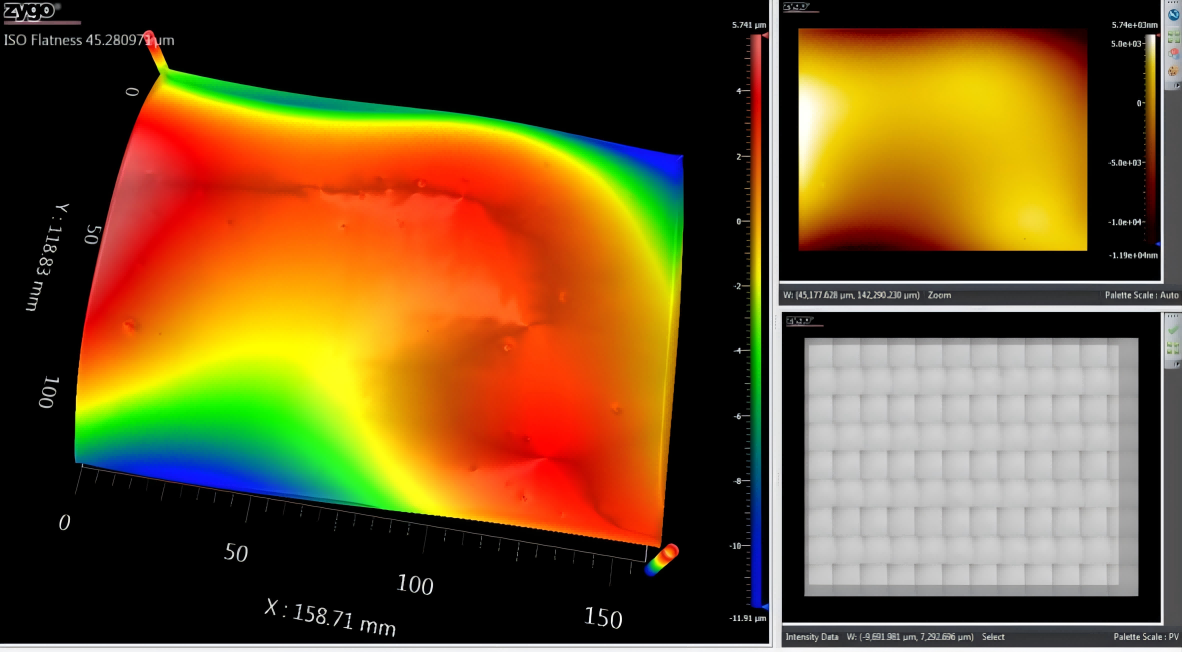
A stable and high-performance stitching process makes measuring large samples simple, efficient, and practical.
Regional Analysis
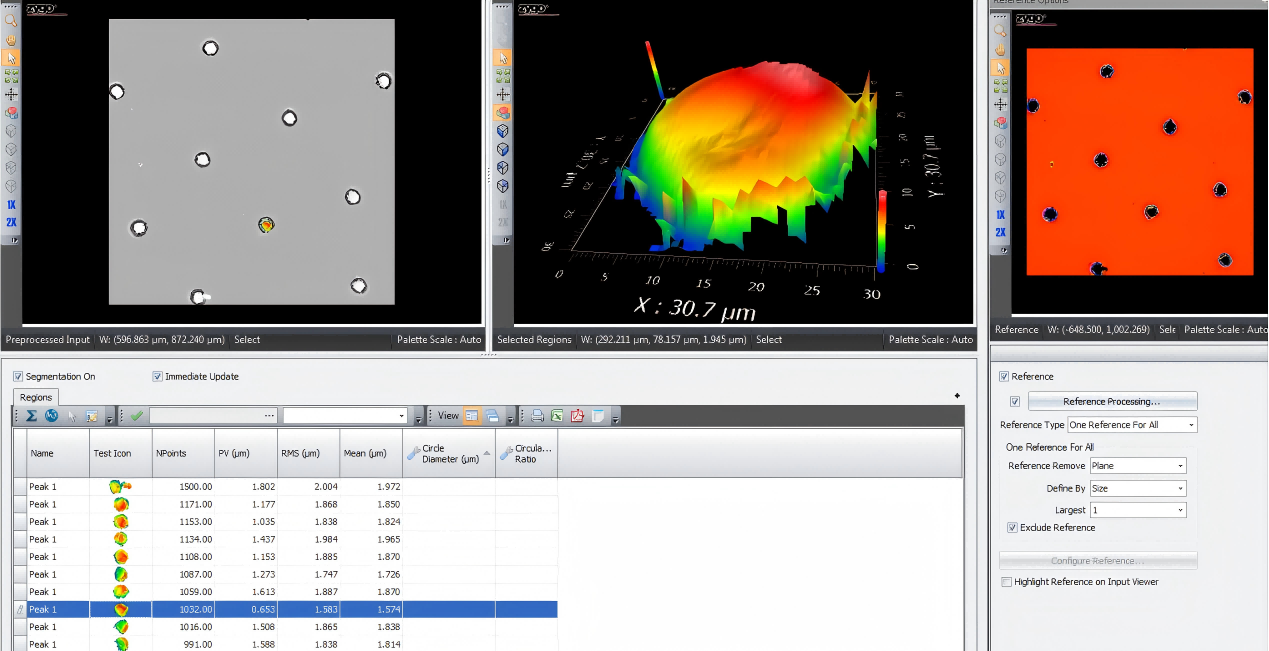
It can automatically analyze, isolate, and quantify localized features such as defects and texture. The system provides comprehensive statistics for the entire sample, as well as detailed analysis of individual specific regions, reporting key parameters including area, volume, shape, location, and more.
Micro-Surface Structure Analysis
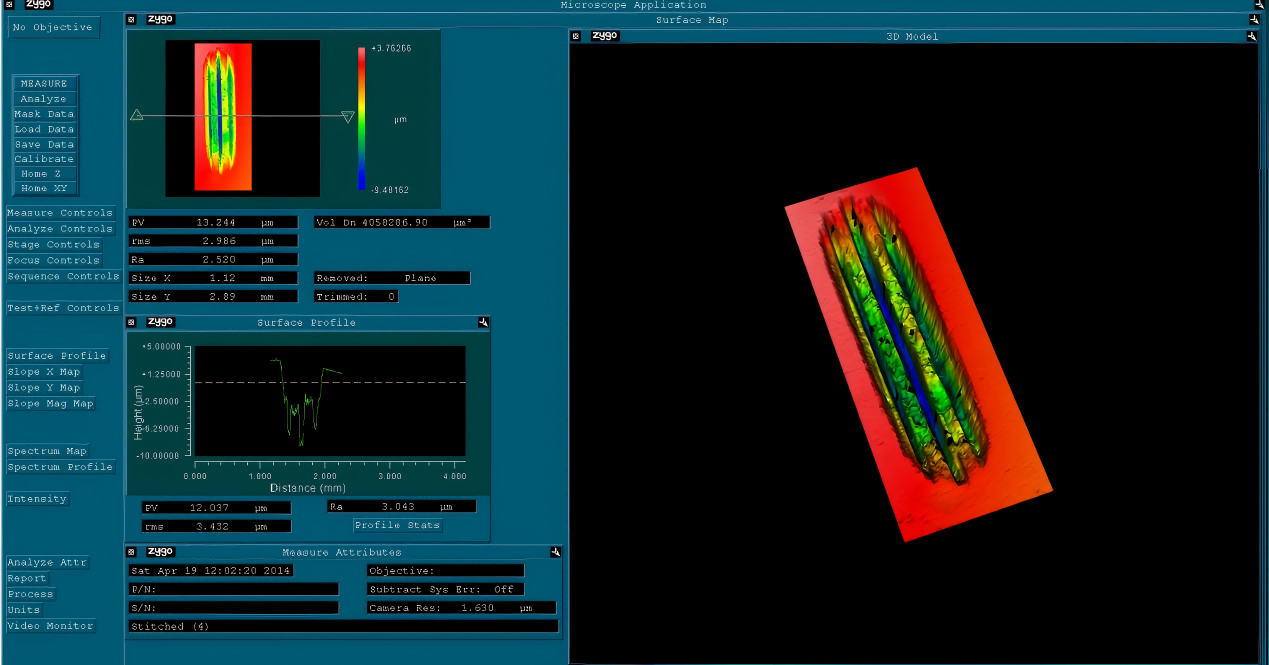
Specializing in the characterization of surface topography, encompassing three-dimensional form, contour, and texture.